 Karney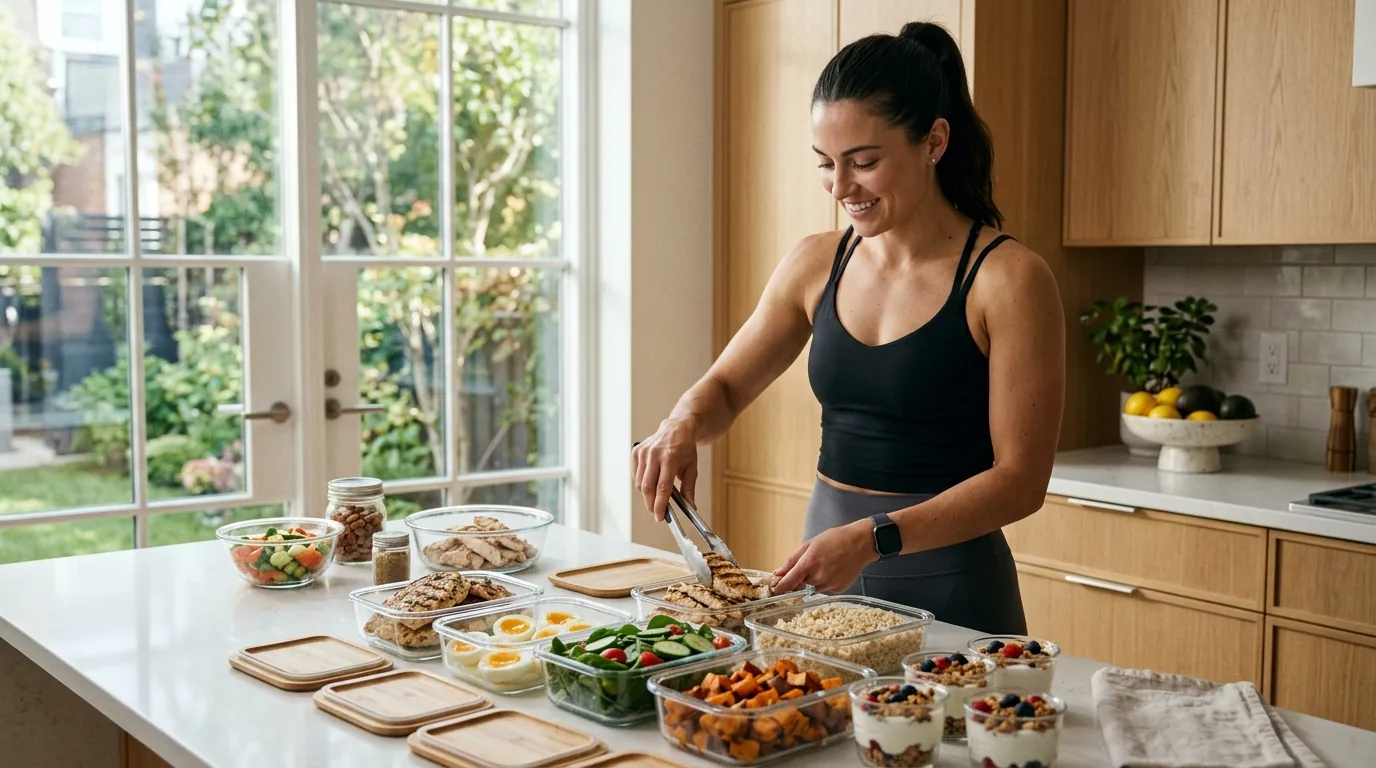
Why the Standard Recommendation for Protein Per Day Is Too Low?
The classic guideline of 0.8 g per kilogram of bodyweight per day comes from research on sedentary adults trying to avoid protein deficiency. Not athletes. Not lifters. Sedentary people. For a 180 lb (82 kg) person, that math gives you 66 grams per day, roughly one chicken breast and two eggs. You will not build or preserve meaningful muscle on that if you train regularly.
A landmark 2017 meta-analysis by Morton and colleagues in the British Journal of Sports Medicine pooled 49 controlled studies and found that muscle protein synthesis stops responding to additional protein somewhere around 1.62 g/kg per day for most people in a building phase. For people cutting calories, the ceiling moves higher, up to 2.2 g/kg, because some dietary protein gets burned for fuel instead of repair when overall energy intake is low.
The short version: if you train with weights, the standard guideline undershoots you by roughly a factor of two. Ignore it.
How Much Protein Per Day Do You Need Based on Your Goal?
Here are the working targets organized by goal. Use lean bodyweight if you carry significant body fat, since you are not trying to feed adipose tissue.
- Building muscle (caloric surplus): 1.6 to 2.0 g/kg per day
- Losing fat (caloric deficit): 2.0 to 2.4 g/kg per day
- Maintaining or recomping: 1.8 to 2.2 g/kg per day
Put real numbers on this:
- 180 lb (82 kg) male lifter building muscle: 131 to 164 g protein per day
- 180 lb (82 kg) male lifter cutting: 164 to 197 g protein per day
- 150 lb (68 kg) female athlete building muscle: 109 to 136 g protein per day
- 150 lb (68 kg) female athlete cutting: 136 to 163 g protein per day
- 130 lb (59 kg) beginner (any goal): 95 to 118 g protein per day
Pick your category. Round to the nearest 10. Write it somewhere visible. That number is your daily anchor.
The Best Protein Sources and How Much They Deliver
Not all foods marketed as high-protein are created equal. Here is what a real serving gives you, with no rounding in your favor:
- Chicken breast (170 g, cooked): 51 g protein, 290 kcal
- Canned tuna (140 g): 33 g protein, 150 kcal
- Eggs (3 large): 19 g protein, 210 kcal
- Greek yogurt, plain (200 g): 18 g protein, 120 kcal
- Cottage cheese (200 g): 24 g protein, 160 kcal
- Lean beef (170 g, cooked): 46 g protein, 290 kcal
- Whey protein shake (1 scoop, 30 g powder): 24 g protein, 120 kcal
- Tofu, firm (170 g): 20 g protein, 140 kcal
- Lentils (200 g, cooked): 18 g protein, 230 kcal
- Edamame (150 g): 17 g protein, 190 kcal
If you are targeting 160 g per day, a practical day might look like this: 3 eggs at breakfast (19 g), a 170 g chicken breast at lunch (51 g), cottage cheese as an afternoon snack (24 g), one scoop of whey after training (24 g), and 170 g of lean beef at dinner (46 g). That is 164 g total and nothing exotic.
Supplements fill gaps. Whole food sources deliver micronutrients, better satiety, and superior leucine retention. Use a shake to top up when you are short, not to replace a meal you could have eaten.
Protein Timing: Does It Actually Matter?
The old anabolic window idea, that you must down a shake within 30 minutes of your last rep or the session is wasted, has been largely debunked. The real post-workout window is closer to 4 to 6 hours. If you ate a solid meal two hours before training, you are not racing against the clock.
That said, two timing principles hold up well in the research:
- Spread protein across at least 4 meals. Muscle protein synthesis responds to individual doses. Most research supports a per-meal dose of 30 to 50 g to maximize the anabolic response. Eating 160 g in one sitting does not give you a 160 g stimulus. Four 40 g servings will outperform one 160 g blowout every time.
- Lead with protein at breakfast. A protein-rich breakfast of 30 g or more is consistently associated with better total daily intake and less evening overeating. Starting the day anchored makes the rest of your meals easier to manage.
Pre-sleep protein is worth a mention too. 40 g of slow-digesting protein before bed, casein from a supplement or just cottage cheese, increases overnight muscle protein synthesis. Particularly useful if you train hard five or more days a week.
Six Practical Ways to Hit Your Protein Per Day Target Without Obsessing
Knowing your number is step one. Actually hitting it consistently is where most people stall. Here is how to make it automatic:
- Anchor every meal with the protein source first. Before you choose carbs or fat, pick your protein: 40 g of chicken, 3 eggs, a scoop of whey. Build the meal around it, not the other way around.
- Batch cook your proteins on Sunday. Grill or bake 1.5 kg of chicken, hard-boil a dozen eggs, cook a batch of ground beef. Protein is never a question of what is in the fridge when the answer is already portioned in containers.
- Keep high-protein snacks visible and accessible. Cottage cheese, Greek yogurt, hard-boiled eggs, string cheese. Zero prep, high return. If the easiest food is protein-dense, you hit your numbers without thinking about it.
- Use a protein shake strategically, not habitually. If you are 40 g short at 8 PM, one shake solves it cleanly. Scheduled shakes you drink regardless of the day's intake just add calories without teaching you to eat better.
- Order protein first at restaurants. Steak, grilled salmon, roast chicken. A 220 g restaurant steak gives you roughly 60 g of protein. One meal handled. Build the rest of the order around that anchor.
- Track for two weeks, then cook by feel. Two weeks of logging teaches you what a high-protein day actually looks like. After that, most people can eyeball their intake within 15 to 20 g without weighing a single thing.
Common Mistakes That Tank Your Daily Protein Intake
These patterns show up constantly when people say they eat enough protein but their actual numbers tell a different story:
- Counting mixed dishes instead of protein sources. A bowl of pasta with chicken contains roughly 25 g of protein, not 50. The pasta is mostly carbohydrate. Track the protein source, not the dish name.
- Trusting restaurant high-protein labels at face value. A fast-casual protein bowl typically delivers 28 to 35 g. Perfectly fine, but not the 50 g you might assume. Check the number, do not assume.
- Using plant proteins without stacking sources. Lentils alone, rice alone, these are incomplete amino acid profiles. Pair them together, or add a dairy or egg source, to cover the full spectrum your muscles need for repair.
- Eating too little early and cramming at night. Getting 100 g of protein at dinner after a low-protein day gives you roughly 40 to 50 g of actual muscle protein synthesis stimulus, not 100 g. The body cannot use it all at once. Spread the load.
- Forgetting that training volume raises your requirement. If you just went from 3 to 5 sessions per week, your protein target goes up. Recalculate every time your training load shifts significantly.
How to Track Your Protein Without Losing Your Mind?
Manual food logging is the most reliable method for anyone who has never seriously tracked protein. You do not need to do it forever, just long enough to calibrate your intuition, usually 2 to 4 weeks is enough.
If you already use a workout tracker to log your training, protein tracking fits into the same daily habit loop naturally. With Karney, you log your sets (say, 4x8 at 155 lb on bench press) in two taps, and the app tracks your training volume and progress over time. Layering your protein intake into that same daily log means you can spot real patterns: low-protein weeks almost always line up with stalled lifts and slower recovery. The data surfaces what your gut feeling misses.
Once you have tracked for a few weeks and know your typical meals cold, drop to a weekly spot-check. Weigh and log your food on three random days per month. If the average lands within 10 g of your target, you are dialed in. If it is off by 30 g or more, tighten up for two weeks and recheck.
The goal is not perfection every single day. It is consistency most days. Hit 90 percent of your protein target on six out of seven days and you will outperform nearly every lifter who wings it and hopes for the best.